This site uses cookies if you don't accept cookies you can leave - check our Terms page. ACCESSIBILITY





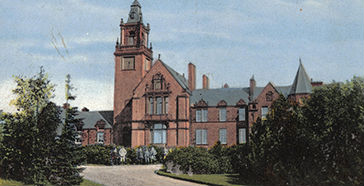 In the 18th century Beith was involved in cotton spinning, thread making and muslin weaving. It also had a brewery, distilleries, a tobacco factory and corn mills. John Witherspoon, minister of the Parish Church in 1744, emigrated to America and was instrumental in drawing up the Declaration of Independence.
In the 19th century the focus of Beith changed to furniture manufacturing. The historic core of the town centre, comprising of Main Street, Eglinton Street, The Strand and part of Barrmill Road, was designated as a Conservation Area in 1998. The Beith Townscape Heritage Initiative restored historical buildings at the Cross, which were of historic significance but in a poor state of repair.
Beith has a historical connection to smuggling and built a reputation during the 18th century as being a town which harboured those whose intentions were not always lawful. In 1733 forty or fifty Beith smugglers sacked the Irvine Customs House, escaping with a rich booty of confiscated contraband goods and by 1789 a company of 76 soldiers were quartered in the town dealing with the continuing illicit trade in tea, tobacco, and spirits. This caused great inconvenience to the law-abiding citizens on whom the soldiers were billeted.
The town was policed in this fashion for some time thereafter. Hence, the Main Street's popular public house is still called the Smugglers Tavern, recalling the days when Beith's location between the coast and Paisley and Glasgow, made it a convenient stopping off point for those involved in nefarious activities. A possible relic of the smuggling days of Beith is the ley tunnel that is said to run from the site of the Grace Church on Eglinton Street to Kilbirnie Loch. Read more about Beith...
Beith History
-u3232.jpg)
-
 Useful Links
Information on rail and bus travel is available from: www.travelinescotland or by calling 0871 200 2233.
Information on outdoor access in North Ayrshire is available from: [email protected] and www.north-ayrshire.gov.uk/outdooraccess.
Information on the Scottish Outdoor Access Code is available from: www.outdooraccess-scotland.com.
Information on local path networks is available from: www.ayrshirepaths.org.uk.
Information on health and wellbeing in Ayrshire is available from: www.healthinfoshop.scot.nhs.uk.
This project was funded by:


North Ayrshire Council, Cunninghame House, Irvine KA12 8EE Telephone: 0845 603 0590 Email: [email protected]